home · 2-minute read
ADHD and cleaning: where to start when everything is a mess
in 30 seconds
- Messiness is common with ADHD and tied to executive function, not laziness.
- Start with one small, visible zone and a short timer. Stop when it rings.
- Let systems do the remembering: labels, one home per item, a short evening pickup.
Start with one small, visible spot and a 15-minute timer. Trash first, then dishes, then anything that has an obvious home. When the timer rings, you’re allowed to stop. One clear surface changes how a room feels.
Why it’s harder with ADHD
Understood links messiness with ADHD to executive function (planning, sorting, following through), and says it usually isn’t laziness. A messy room asks for hundreds of small decisions at once. The fix is fewer decisions per round.
A calm way to start
Choose one zone
One surface, one corner, one chair. Small and visible.
Tiny version: The table nearest to you.
Low-energy version: Just the nightstand.
Set a 15-minute timer
CHADD suggests rounds of “just 15 minutes”.
Tiny version: Five minutes.
Low-energy version: Two minutes.
Go in an easy order
Trash first, then dishes, then clothes, then things with an obvious home.
Tiny version: Only trash.
Low-energy version: Only one bag of trash.
Make homes obvious
Understood suggests labelling storage; CHADD suggests clear containers so you can see what’s inside.
Tiny version: Label one box.
Keep it going lightly
A 10-minute evening pickup, as CHADD suggests. And pick which messes actually matter to you.
Tiny version: Five things back, every evening.
Let it choose the first job
List a few cleaning jobs and let the picker choose, so you don’t have to.
Open the task pickerasking for company while you tidy
Could you keep me company while I tidy the kitchen for 15 minutes? You don’t have to help, it just makes it easier.
Want a ready-made plan? The 10-Minute Reset breaks six rooms into small tasks you can print.
Questions people ask
Why can’t I just clean like other people?
Cleaning asks a lot of executive function. Smaller rounds and fewer decisions make it easier.
What if I get overwhelmed halfway?
Stop. The timer is the deal. Half a surface is still progress.
How do I keep it up?
A short daily pickup beats a big weekly clean. Choose which messes matter, as Understood suggests.
When to get support: This guide shares everyday strategies, not medical advice. If this is making daily life hard for weeks, talk to a doctor or a mental health professional. If you’re in crisis, you can find free, confidential support in your country at findahelpline.com.
Sources
free printable kit
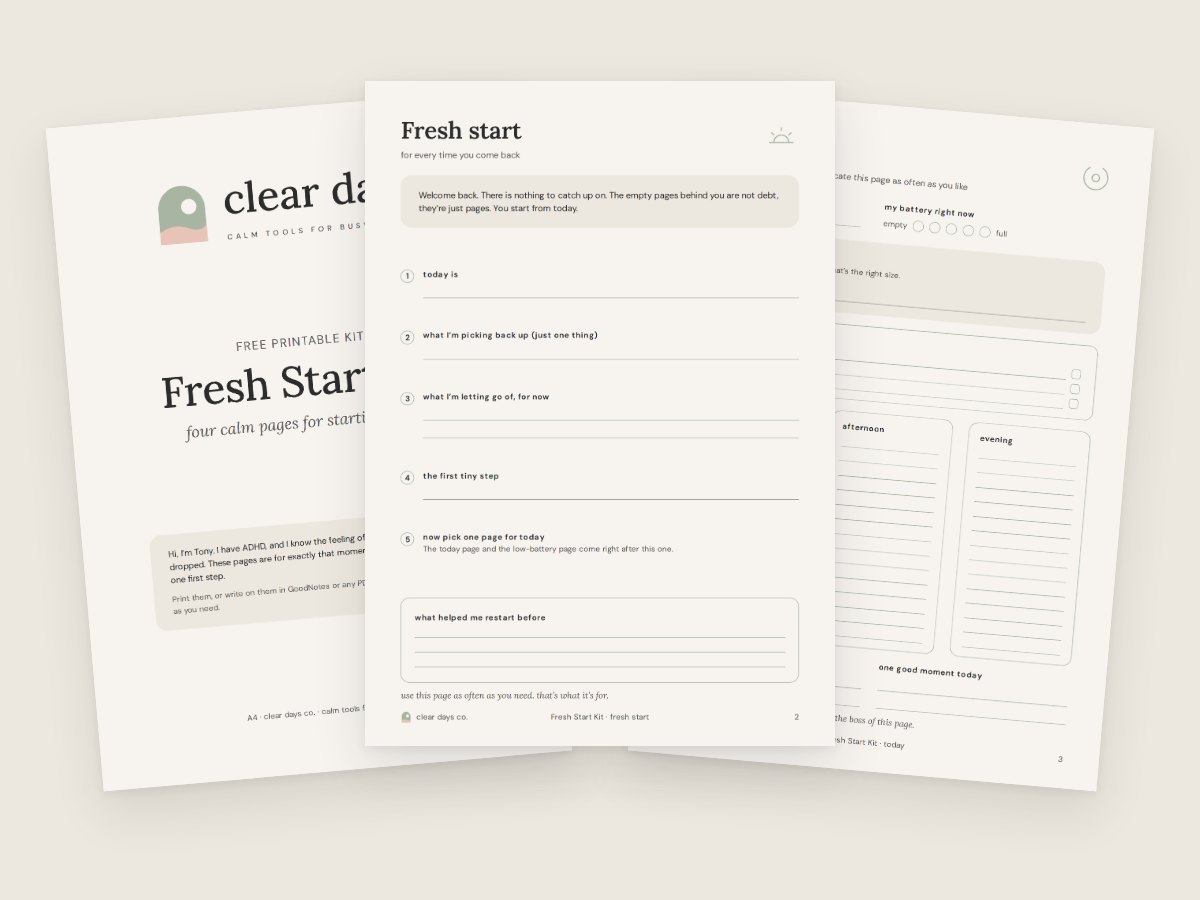
Free: the Fresh Start Kit
Six calm pages for the moment you come back to a plan you dropped: a fresh start page, a one-first-step today page, a low-battery day page and a write-it-all-down page. A4 and US Letter.
Get the free kitNo catching up. Just one first step.